
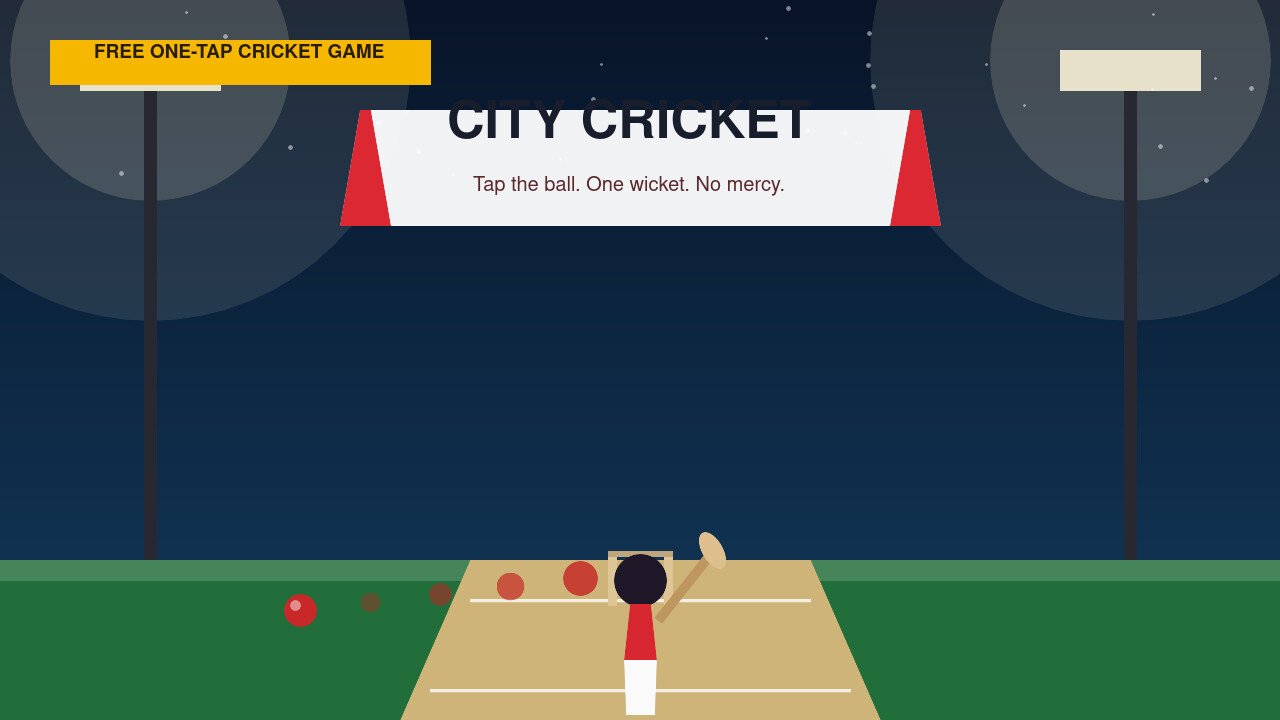
City Cricket is a free browser game built around one simple, nerve-racking rule: you get one wicket, and one wicket only. Pick a city team, watch the bowler, and tap at the right instant to send the ball racing away. Miss once and the innings is over. It sounds brutal for a game with such a friendly title, and that is exactly why it is so easy to keep pressing replay.
This guide explains what City Cricket is, how the tap timing actually works, what tends to trip players up, and a few habits that help you post a bigger score. It also points to two more cricket games on this site if you want to keep the streak going.
What Is City Cricket?
City Cricket is a fast, tap-to-play cricket game where balls arrive one after another and your job is simple: hit as many as you can before you are out. There is no full team to manage and no long match to sit through. It is just you, the bat, and a single wicket standing between you and a new high score.
Quick facts:
- Type: one-tap, one-wicket cricket game
- Category on this site: Sports
- Controls: a single tap or click, timed to the ball
- Technology: HTML5, runs in the browser
- Released: 2019
- Teams: pick from IPL-style, city-themed sides
- Cost: free to play, no download
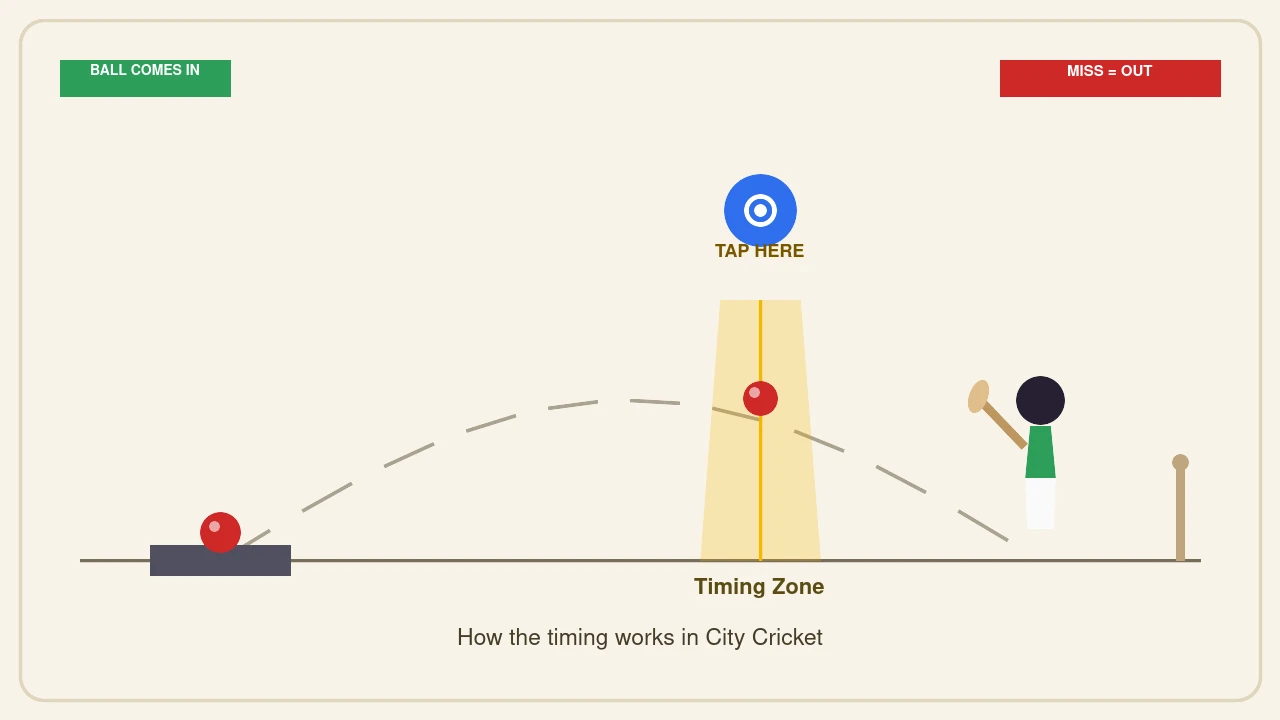
How Do You Play City Cricket?
Start by choosing a city team, more of a cosmetic pick than a strategic one, since the challenge itself does not change from team to team. After that, every round follows the same short loop.
- Watch the bowler. The ball is delivered toward you at a steady, readable pace at first.
- Tap at the right moment. Time your tap to when the ball reaches the hitting zone in front of you, not before and not after.
- Watch your score climb. A clean hit adds to your total and sends the next ball in.
- Stay alert as it speeds up. Balls arrive faster and the window to react gets tighter the longer you survive.
- One miss ends it. There is only one wicket in play, so a single mistimed tap finishes the innings and shows your final score.
Why Does One Wicket Make City Cricket So Tense?
In a full match of real cricket, a wicket is one of eleven a side has to lose, so a single mistake rarely ends the innings on its own. City Cricket strips that cushion away. There is nothing to fall back on, which turns a casual tap-timing game into something closer to a highwire act: every ball matters exactly as much as the last one did, right up to the point where one of them does not go your way.
That pressure is also what keeps players coming back. Because a round can end at any moment, and because starting over costs nothing but a tap, City Cricket has the same pull as other one-life arcade games. The only real difference between a mediocre score and a personal best is how calm you stayed as the balls sped up.
Tips to Score Higher in City Cricket
Watch the ball, not the scoreboard
It is tempting to glance at your rising score after a good run, but every glance away costs you a fraction of a second you need for the next ball. Keep your eyes on the delivery, not the number.
Build a rhythm early
The first several balls usually arrive at a manageable, fairly even pace. Use them to find your timing rather than rushing, since a rhythm you build early tends to carry you through the faster balls later on.
React, don’t anticipate
Guessing when the next ball will arrive and swinging early is one of the fastest ways to lose your only wicket. Wait until you actually see the ball reach the hitting zone, then tap. A game that rewards reaction time punishes players who try to predict it instead.
Expect the pace to increase
City Cricket gets harder the longer you last, so treat a rising score as a warning to stay sharper, not a sign to relax. The balls that end most innings are not the first few, they are the ones that arrive just after a player starts feeling comfortable.
Play short bursts
Because one miss ends the round, tired reflexes cost you more in a game like this than in most others. A few focused rounds tend to produce better scores than one long stretch of play.
Is City Cricket Good Practice for Reaction Time?
In a loose sense, yes. The entire game is built on judging when a moving object reaches a fixed point and reacting the instant it does, which is the same skill involved in hitting a ball in real cricket, catching a fast-moving object, or timing a reaction in plenty of other sports. It is not a substitute for coached practice with a real bat and ball, but as a quick, free way to sharpen timing and focus for a few minutes, it does the job well.
City Cricket FAQ
Is City Cricket free to play?
Yes. You can play City Cricket in your browser here at no cost and without installing anything.
How many wickets do you get in City Cricket?
Just one. A single missed tap ends your innings, which is the whole point of the game.
Do the city teams affect how City Cricket plays?
No. The teams are a visual choice. The challenge, timing and difficulty curve stay the same no matter which one you pick.
Does City Cricket get harder as you play?
Yes. The balls speed up the longer your innings lasts, so the timing window keeps shrinking the further you get.
What is the best way to get better at City Cricket?
Focus on reacting to the ball rather than guessing its timing, keep your eyes on the delivery instead of the score, and play in short, focused sessions rather than one long one.
More Cricket Games to Try
If the one-wicket pressure of City Cricket suits you, these are worth a look too:
- Cricket Gunda: another cricket-themed browser game on this site.
- Gully Cricket: a street-style cricket game for a more relaxed pace.
Ready to test your timing? Open play City Cricket and see how far one wicket can take you.